Industrial One Pass UV Printing for Building Panels
Discover industrial One Pass UV printing for decorative building panels with YiliJet DREAMS systems. Explore a production-tested MDF application, print quality results, material compatibility and high-throughput panel printing
Industrial One Pass UV Printing for Building Panels
High-throughput digital printing for decorative panel manufacturing.
Building panel manufacturers are under increasing pressure to offer differentiated designs, consistent surface appearance and flexible production options.
Industrial digital printing provides a way to produce decorative graphics on compatible rigid panels while supporting digital artwork changes and a wider range of design possibilities.
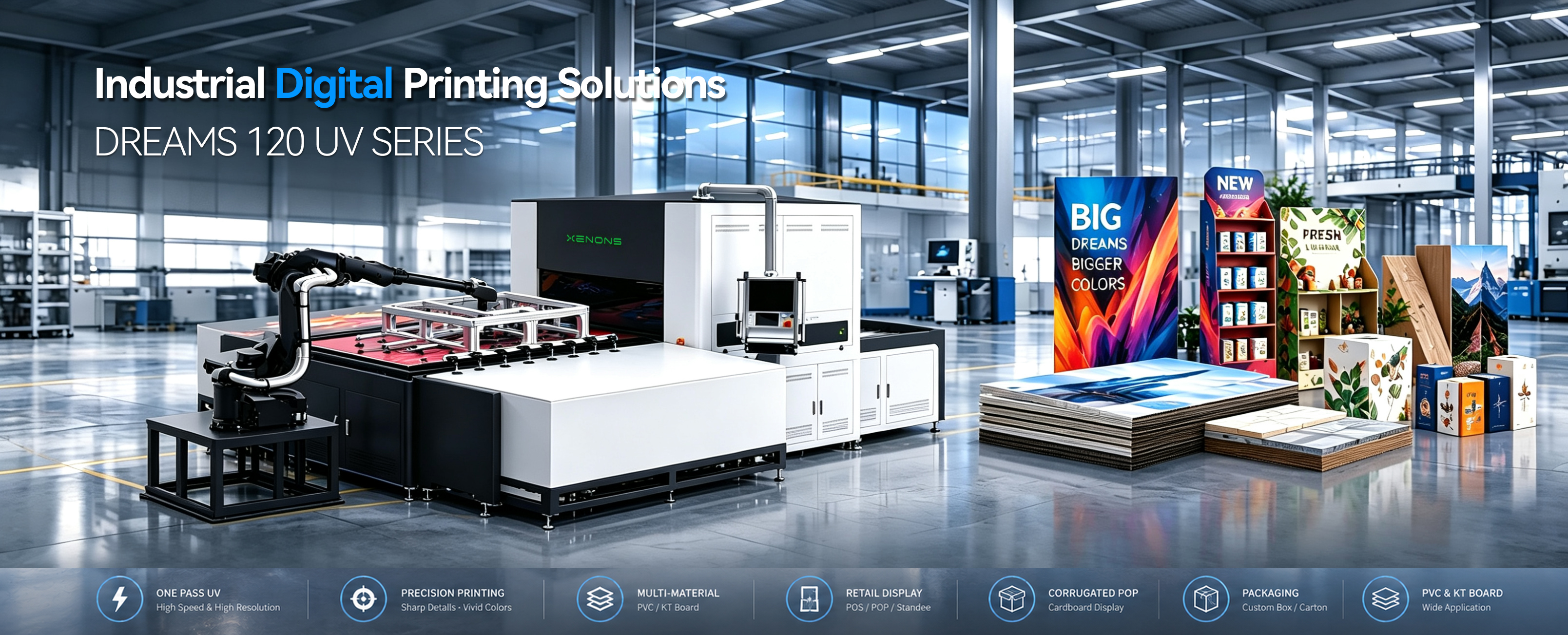
YiliJet's DREAMS One Pass UV printing systems are designed for manufacturers evaluating high-throughput digital printing on compatible panel materials.
The systems use a fixed printhead array and controlled substrate transport to print digital artwork as the panel moves through the printing zone.
In a reported MDF production test, the DREAMS 1224 printed 1220 × 2440 × 18 mm boards,
with a 17-second print cycle for the tested walnut woodgrain design and a reported continuous production rate of 100 boards per hour over four hours.
This provides a concrete reference for evaluating One Pass printing on MDF.
Other building panel materials require their own substrate, ink adhesion, curing and production tests.
One Pass printing performance: MDF reference test
Reference printer
DREAMS 1224
Continuous output
100 boards/hour
Other reported findings: 17-second walnut woodgrain print cycle, 8–12 ml/m² ink consumption,
very good image consistency and substantially reduced banding versus the reported baseline.
MDF reference data
These figures apply to the reported MDF test. They are not general performance specifications for all building panels or all DREAMS models.
Building panel applications
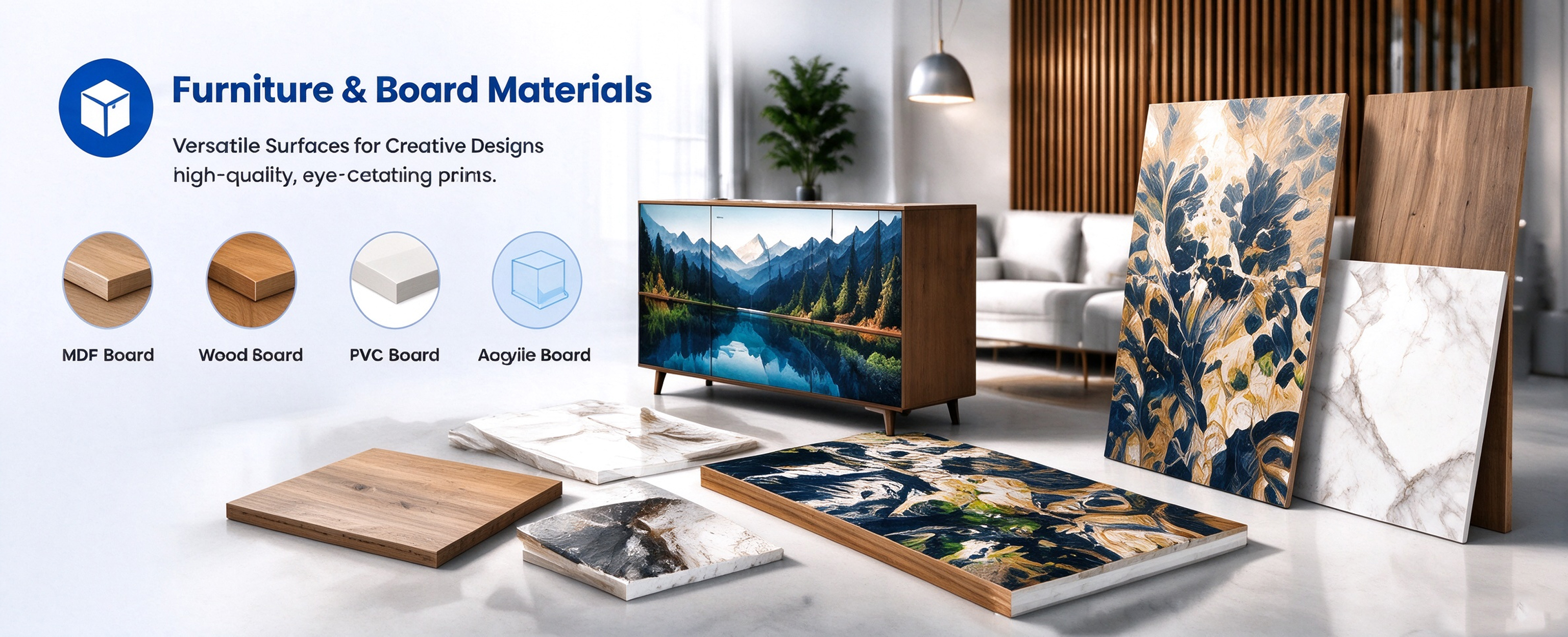
MDF Decorative Panels
Furniture, cabinetry, decorative wall panels and interior fit-out products.
Status: MDF reference test available.
HPL Decorative Panels
Decorative surfaces for furniture, interiors and commercial environments.
Status: Material compatibility to be validated.
PVC Panels
Selected interior claddig and decorative panel applications.
Status: Material compatibility to be validated.
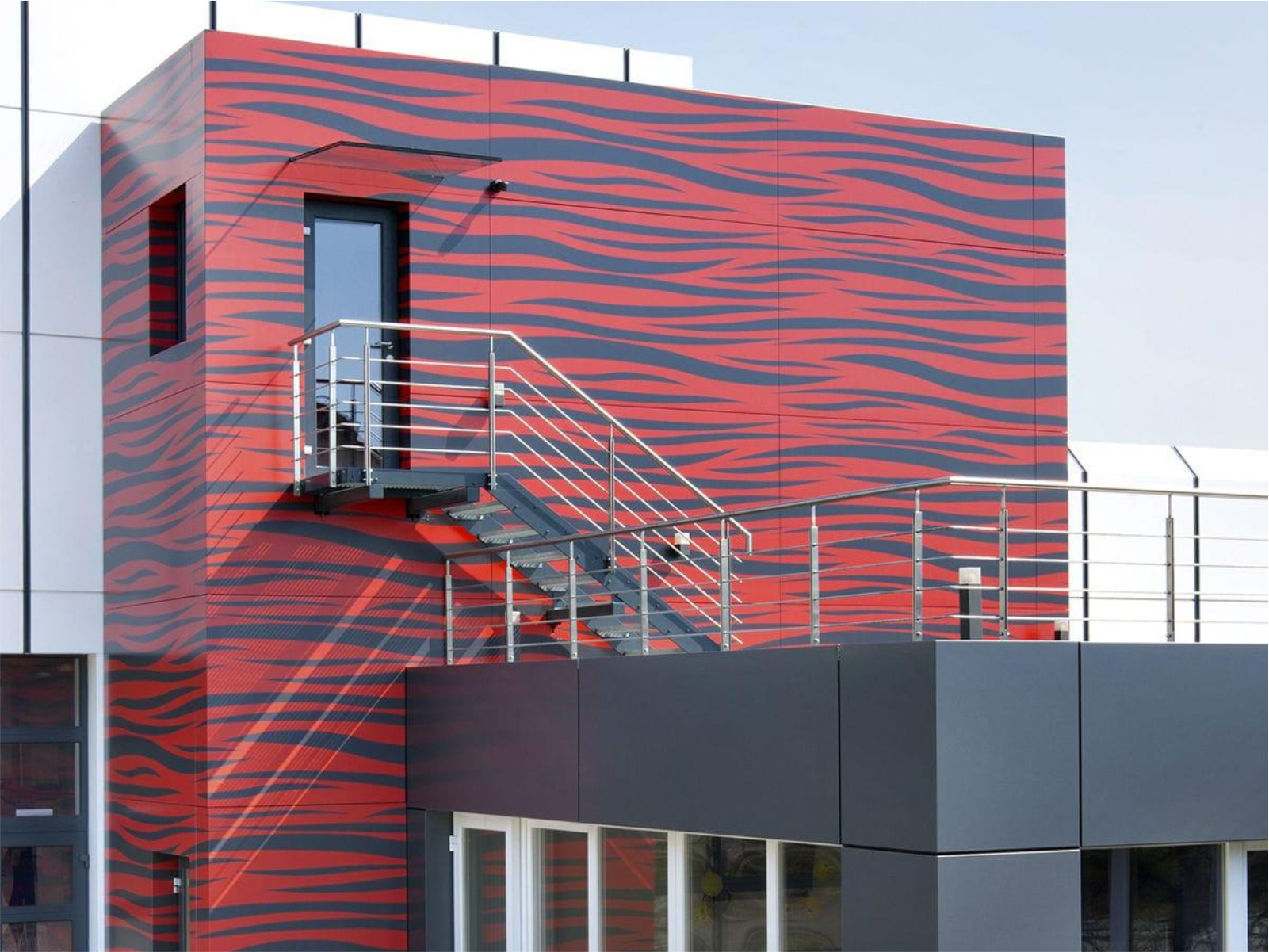
Aluminum Composite Panels
Selected architectural, display and decorative applications.
Status: Coating and ink compatibility to be validated.
How One Pass printing supports panel production
High-throughput digital decoration
The One Pass architecture can be valuable when manufacturers need to print repeated panel designs in a production-oriented workflow. The relevant performance metric is not simply maximum print speed, but the number of accepted panels produced over a defined period.
Flexible decorative designs
Digital artwork can be changed between jobs, making it possible to evaluate customized woodgrain, marble-inspired, stone-effect and other decorative designs without depending exclusively on fixed-design printing processes.
The practical benefit depends on the RIP workflow, color management, production scheduling and the requirements of the existing finishing process.
Consistent visual output
For decorative panel manufacturers, consistency across a batch is essential. The DREAMS 1224 MDF test reported very good image consistency and minimal visible color variation.
For commercial production, this should be translated into an agreed color measurement procedure, approved reference samples and acceptance tolerances.
Reduced visible banding
The reported MDF comparison showed substantially reduced banding. This may be relevant for large decorative surfaces, where repeated patterns and tonal transitions can make printing defects more noticeable.
Comparative claims should be backed by equivalent images and documented operating conditions.
Material compatibility: what must be tested?
|
Panel material
|
Primary validation priorities
|
Current evidence
|
|
MDF
|
Surface preparation, adhesion, color consistency and curing
|
Reported production test
|
|
HPL
|
Surface chemistry, ink adhesion and wear resistance
|
Test required
|
|
PVC
|
Surface treatment, ink compatibility and dimensional stability
|
Test required
|
|
ACP
|
Coating compatibility, adhesion and panel flatness
|
Test required
|
|
PET-faced panels
|
Surface energy, adhesion and finishing compatibility
|
Test required
|
|
Other rigid boards
|
Thickness, flatness, transport and ink compatibility
|
Test required
|
The production workflow should be qualified for the actual board construction, not just the nominal material name.
For example, printing on a coated or laminated MDF panel is a different surface-compatibility question from printing on raw MDF.
Featured case study: DREAMS 1224 MDF printing
Production-tested reference for decorative panel manufacturers
YiliJet evaluated the DREAMS 1224 One Pass UV printing system using MDF boards measuring 1220 × 2440 × 18 mm.
The reported test used a 720 × 1800 print mode.
A walnut woodgrain design achieved a reported 17-second print cycle, while continuous production reached 100 boards per hour over four hours.
Reported ink consumption was 10–12 ml/m².
The test also showed very good image consistency, minimal visible color variation and substantially reduced banding compared with the reported baseline process.
Adhesion was reported as normal under the test conditions, with additional post-curing identified as an option for further evaluation.
These results provide an initial benchmark for MDF panel production.
Manufacturers working with HPL, PVC, ACP or other panel surfaces should conduct separate material tests before estimating production capacity or print durability.
(Recommended case-study images:补上)
DREAMS 1224 printing a full-size MDF board.
Close-up of the printed walnut woodgrain.
Marble-effect artwork and the corresponding printed panel.
A side-by-side comparison of the baseline and One Pass printing results.
The board feeding and unloading workflow during continuous production.
Only use real test photos for claims about actual output, image quality and material performance.
Building panel production cost model
For manufacturers, the total cost of a printed panel depends on more than ink consumption.
A practical cost model should include:
Ink consumption and ink price
Measured electricity consumption
Labor allocated to accepted output
Facility and production-line costs
Maintenance and consumables
Waste, reprints and rejected panels
Any required primer, coating or post-curing process
Use the measured MDF data as a reference only after confirming the energy measurement and the actual production denominator. Do not apply the MDF ink consumption or cycle time to other materials without testing.
Building panel printing FAQ
What is an industrial building panel printing machine?
It is a digital printing system designed to print on compatible rigid panels used in decorative, furniture, interior or selected architectural applications. The appropriate machine depends on panel dimensions, surface characteristics, required output and production workflow.
Can One Pass UV printing be used for decorative building materials?
It can be evaluated for compatible building panels. Surface preparation, ink adhesion, curing, color consistency and end-use requirements must be validated for each material.
What is the production speed of the DREAMS 1224?
In the reported MDF test, the walnut woodgrain design had a 17-second print cycle, and continuous production reached 100 boards per hour over four hours. Other materials, designs and production setups may produce different results.
Can the same printer handle MDF, HPL, PVC and ACP?
Machine handling capability and print-surface compatibility must both be checked. Even when a panel fits within the machine's working dimensions, its coating and surface chemistry may require different preparation or ink configurations.
How can manufacturers evaluate the ROI of a One Pass printing system?
Compare accepted production output, labor, ink, energy, waste, maintenance, finishing and equipment costs against the existing process. The comparison should use equivalent products and quality criteria, with the same accounting period.


